Catastrophic Horse Racing Beginner Guide
Finish your first races with a readable route, recover after hazards, and distinguish finishing from winning in this Jonsena Studios Roblox game.
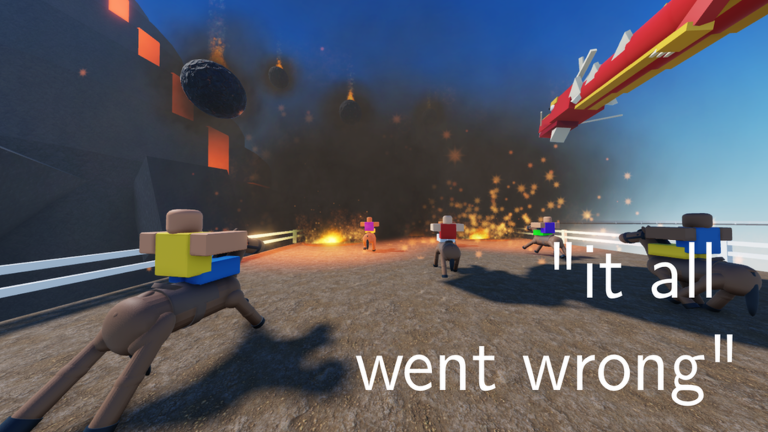
Catastrophic Horse Racing asks you to race other players while keeping your horse alive through a changing collection of obstacles and events. For a first session, aim to reach the finish before chasing first place. Learn to recognize the lane ahead, notice when an event changes visibility or movement, and avoid turning a small delay into several consecutive collisions. This is a survival race: a clean route can matter more than being ahead halfway through.
View reference image
On this page
Catastrophic Horse Racing asks you to race other players while keeping your horse alive through a changing collection of obstacles and events. For a first session, aim to reach the finish before chasing first place. Learn to recognize the lane ahead, notice when an event changes visibility or movement, and avoid turning a small delay into several consecutive collisions. This is a survival race: a clean route can matter more than being ahead halfway through.
This guide covers Jonsena Studios’ Roblox Experience, Place 109917531711176. The official description and badge records were checked on October 18, 2026. Votex’s October 15 gameplay provides an observable example of several races, but predates the October 16 Mecha T-Rex and badge-board update. The advice below is our suggested practice routine, not a claim that we played the latest build or discovered a guaranteed winning route.
Recognize the goal before the first race
The official listing describes competing with horses while avoiding death. The official A Horse For Work badge requires winning a race; joining alone awards the separate Hold Your Horses badge. Those are different milestones. Treat joining, finishing and winning as separate questions when deciding what went wrong. A finish that does not produce a win badge is not evidence that the finish failed.
Watch one round’s finish and result display before interpreting your statistics. In the dated video, the creator sometimes questions how the result or win counter was calculated. That commentary does not establish a scoring formula. We therefore do not promise that a particular placement, survival time or number of remaining riders always produces a win. Use the current result panel and official badge requirement as your checks.
Build a repeatable opening routine
Begin with a simple observation goal: follow the course rather than following the nearest player. In the October 15 recording, logs and other track obstacles appear ahead while larger events add distractions around the riders. Looking only at an opponent can hide the next obstacle. Leave room to make a correction, then look forward again after each turn or jump.
The recording demonstrates jumping, but this guide does not assign a keyboard, controller or mobile binding that we have not verified. Check the prompts on your own device. Test a jump when the path is clear, then observe the result before relying on it near a hazard. A demonstrated action and a universal control binding are different pieces of information.
For the opening races, choose one behavior to improve at a time. In one race, practice looking far enough ahead to notice a log. In the next, practice recovering your heading after being knocked aside. In another, watch how the current event changes what you can see. Trying to optimize movement, attack rivals and collect every object immediately makes it harder to identify the cause of a failure.
Keep your route readable
Votex’s gameplay includes cluttered stretches, banana peels, landmines, large hands and other moving threats. These are examples from that recording, not a complete current obstacle catalog. Your useful question is whether the immediate path is still readable. If it is, pick a gap and commit long enough to get through. If it is not, avoid making repeated large course corrections based on guesses.
A practical recovery routine is to find the forward direction, identify the nearest clear piece of track and resume watching ahead. Do that before trying to pass the player who just overtook you. The video includes a moment where the rider ends up moving the wrong way after disruption; a rush to regain position can compound an already confusing situation. Our recommendation is to recover orientation first.
Do not assume a visually safe lane stays safe. Events can add threats that were not present when you chose the lane. Equally, do not assume every dramatic effect requires an immediate turn. React to something you can identify, such as an obstacle occupying your route, rather than changing direction merely because the screen becomes busy.
Choose survival over optional detours
The dated recording shows the player pursuing coin-like pickups and describing a temporary protective effect after collecting one. We have not established the complete pickup system, durations or current effect names. Treat that footage as an example of something to inspect, rather than a promise that every similar-looking object is protection. Read the current interface before building a strategy around a pickup.
For a beginner, an optional detour should answer a concrete problem. If you already have a readable route to the finish, crossing into several rivals to pursue an object may add more risk than it solves. If the detour causes a failure, separate that decision from the event itself. You may have lost because you abandoned a clear path, rather than because the event was impossible.
The same principle applies to interfering with other racers. Player interactions are visible in the video, but this page does not present an unverified attack binding or damage table. Learn the race before making contact your main plan. You need to understand how to recover your own direction before adding another moving target to your attention.
Finish the race you are actually in
The finish line is an important visual checkpoint. Keep watching the course until the current game confirms the result. A rider can reach the last stretch with little health, and the official Close Call badge specifically requires crossing the finish with 20 health or less. That requirement proves that a low-health finish is a recognized outcome; it does not make intentionally taking damage a reliable beginner strategy.
If you are hurt near the end, remove optional goals from the plan. Stop chasing a pickup or a rival simply to improve an already difficult run. Focus on a clear approach to the finish. The best lesson from a nearly completed race is often where the last avoidable collision happened, rather than how far ahead you were earlier.
When the race ends, record one useful fact: the obstacle that stopped you, the event that changed visibility, or the decision that took you off the course. Do not turn a single loss into a claim about hidden odds or unfair equipment. A small, specific observation gives you something you can test next round.
Turn a few races into progress
Use a short practice sequence: identify the course, finish a race, then try for a better result while keeping the same recovery habits. Once finishing feels less confusing, read the events and hazards guide for the difference between a named event, an obstacle and a stacked catastrophe round. Use the badges and rewards guide when you want a goal that can be checked against an official requirement.
Avoid judging a horse or a whole strategy from one event-heavy race. The official Experienced Horse badge asks you to experience every event, which already signals that the game contains varied situations. Your early objective is a set of transferable habits: keep the forward route visible, recover direction before pursuing position and distinguish a confirmed result from a guess about scoring.
Finally, the developer’s official listing warns people with epilepsy against playing. Take that specific warning seriously when deciding whether the game’s visual effects suit you. The recorded races contain sudden visual changes, including darkness and crowded effects. Watching footage is useful for understanding the presentation, but it cannot override the developer’s warning or establish that a setting makes it safe.
Step-by-step guide
- Identify the forward route
Locate the track ahead and choose a route you can read. In the first run, prioritize reaching the finish while learning the displayed movement and event cues.
- Recover before pursuing position
After a collision or displacement, identify your current position and the next open part of the track. Recover a readable line before trying to regain race position.
- Check the finish result
Check whether the result says you finished or won. Use that outcome to choose either another clean completion run or a separate attempt at the win condition.
Quick reference
Task checks
| Situation | Check |
|---|---|
| First run | Aim for a readable route to the finish. |
| After a collision | Recover your position before chasing another racer. |
| End of race | Distinguish a completed race from an actual win. |
Video evidence
Watch creator walkthroughs alongside this guide. Check the recording date before following requirements that may have changed.
ROBLOX CATASTROPHIC HORSE RACING IS SO HECTIC...
Watch recognizable race events and recovery. This recording predates the October 16 badge-board update.
FAQ
Which game and source does this guide cover?
This guide covers the exact Jonsena Studios game linked in the sources, checked October 18, 2026. Each gameplay source has its own date.
What if the live interface differs?
Follow current game prompts and check the official listing. Send a correction with the game identity, date and observed difference to linming7277@gmail.com.
Sources
Recheck these links whenever the game version, release status, or strategy changes.
- Official Catastrophic Horse Racing listing Identity and features checked October 18, 2026.
- Official badge requirements Twelve requirements checked October 18, 2026.
- Votex: 2026-10-15 gameplay Dated demonstration; no current numerical guarantee.
- Jcer: 2026-10-12 gameplay Dated demonstration; no current numerical guarantee.